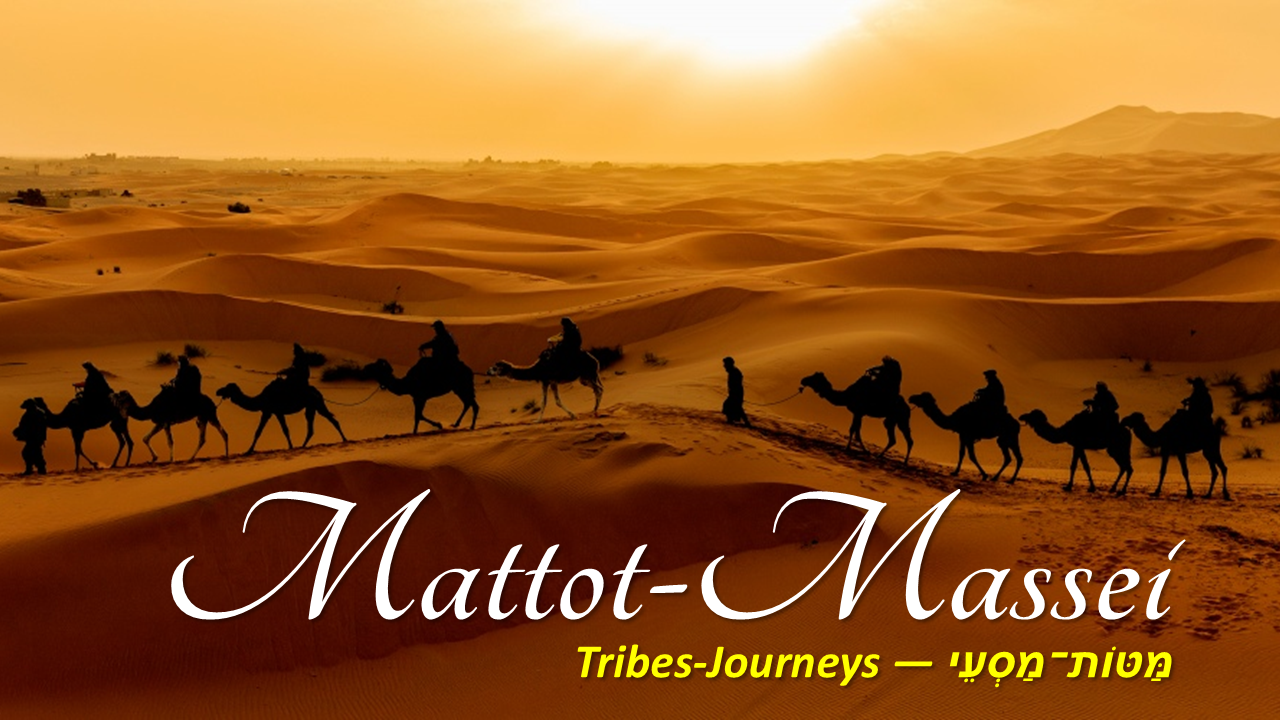
Mattot: This is the forty-second reading from the Torah which means “tribes.” The name is derived from the words of Numbers 30:1, which says, “Then Moses spoke to the heads of the tribes of the sons of Israel.” Numbers chapter 30 discusses the laws of vows and oaths, chapter 31 tells the story of Israel’s war with Midian, and chapter 32 relates the story of how the Reubenites, the Gadites and half the tribe of Mannaseh came to inherit the land east of the Jordan River.
Massei: This word means “journeys” and comes from the first verse of the reading, which begins, “These are the journeys of the sons of Israel” (Numbers 33:1). Massei is the end of the continuous narrative of Torah that began in Genesis with the creation of the universe and the narrative does not resume until the end of Deuteronomy when Moses dies. Massei provides several last-minute details like a list of the encampments from Egypt to the plains of Moab, instructions for apportioning the land as well as the specifics regarding the borders of the land, and explains the land and its borders.
Haftarh Portion Summary
There are three Haftarot that are read during the Three Weeks of Sorrow. Collectively they are sometimes called "the Haftarahs of Rebuke (musar)." In all three, Jeremiah describes punishments that will befall the people if they do not return to the LORD, but also promises redemption if they do. The choice is theirs. Since the Temple was destroyed and Judah was ultimately taken into captivity, it is interesting to read a key verse from the Haftarah: "Before I formed you in the womb I knew you, and before you were born I consecrated you; I appointed you a prophet to the nations" (Jeremiah 1:5 ). How are we to understand our responsibility in light of the overarching sovereignty of the LORD?
Judaism's traditional response is a form of "compatibalism" - although the LORD determines everything, people still have the responsibility to make choices. The sages explained this paradox in Pirkei Avot 3:15 -- "All is foreseen, yet freedom of choice is given. God judges the world according to the good, yet everything depends on the majority of what has been done." During the Three Weeks of Sorrow, we are to look at our own lives and seek teshuvah - repentance. We are responsible for the choices we make - whether to return to the LORD or to continue to idolize our selfishness - but the LORD has the last word in the destination of our lives. "The heart of man plans his way, but the LORD establishes his steps" (Proverbs 16:9). How you reconcile this paradox will reveal a good deal about your own personal relationship with the LORD.
B'rit Chadashah Portion Summary
In Acts, Saul’s dramatic encounter with Yeshua shows that the Messiah still transforms zealous hearts and redirects them toward truth. His conversion is a powerful reminder that Messiah is not merely a topic to defend, but the risen Lord who calls people into obedience and witness. In James, the call to humble repentance matches the same spiritual direction: submit to God, resist pride, and let Him lift you up.
Taken together, these readings show a movement from spoken covenant faithfulness to repentance and restored purpose. Mattot-Massei stresses the weight of vows and the shape of the journey; Jeremiah warns against forsaking God’s covenant; Acts shows Saul’s life being turned by Yeshua; and James calls believers to humility and cleansing before God. In a Messianic reading, the thread is clear: God calls His people to be faithful in word, repentant in heart, and ready to walk wherever Messiah leads.